
The U.S. Department of Justice (DOJ) announced recently it will revise its approach to second request investigations in the hope of making the second request process for mergers and acquisitions more efficient. The announcement does not directly affect the Federal Trade Commission (FTC), which has historically overseen most life science transactions, but the DOJ announcement may amplify the pressure on the FTC to revisit its approach to these second request investigations.
Under the Hart-Scott-Rodino (HSR) Act, entities seeking to conduct a merger or acquisition must file a premerger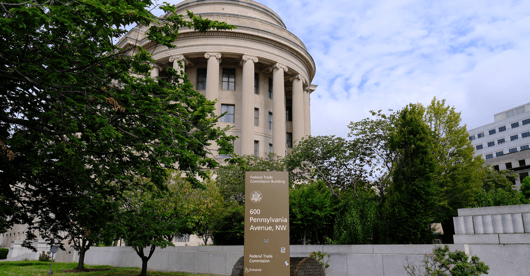 notification form, assuming the proposed transaction meets a dollar-value threshold. These notifications must typically be filed with both the DOJ and the FTC, which then collaboratively determine which government office will handle the review.
The July 23, 2026, DOJ announcement clarifies that the agency will return to its use of targeted second request investigations with an eye toward expediting merger reviews after receipt of the initial HSR filing. Associate attorney general Stanley Woodward said this return to previous policy would allow the department to make more efficient use of resources without diminishing the integrity of the second request investigation process.
The presumed greater efficiency for these targeted second information investigations is enabled by the use of a timing agreement with the parties to the proposed merger. The timing agreement provides a structured sequence for producing documents by the parties to the transaction. Timing agreements, which are not specifically enabled by the statute, also spell out the milestones for the review process, but there is no guarantee that a timing agreement will not extend the waiting period for concluding the transaction.
However, the FTC has apparently not signed on for this resurrection of the targeted second request investigation, seemingly leaving life science companies with the conventional FTC process for second information investigations. Several sources hint at previous FTC use of timing agreements, such as a Nov. 8, 2021, statement by former FTC chairwoman Lina Khan. That statement, part of an agency report to Congress, includes a footnote that points to the agency’s previous use of timing agreements as part of their second request investigations.
Compliance with HSR requirements generally is in a state of flux due to a litigation loss in district court. Judge Jeremy Kernodle ruled in a February 12, 2026, decision that the FTC had exceeded its statutory authority in promulgating a 2024 premerger notification form. The hearing took place in the U.S. District Court for the Eastern District of Texas and was based on a challenge, which claimed that the FTC had violated the Administrative Procedures Act (APA) in forming the 2024 rule.
The FTC has since reinstated the form that predated the 2024 update, which requires significantly less information than the 2024 edition. However, the FTC has appealed the case and has issued a request for information on how the form might be updated within the boundaries of the APA.
Should the FTC ultimately elect to follow the DOJ's lead on the targeted second request process, any such reviews could include an agreement on a rolling production of documents from the parties to the transaction. In the DOJ's sample timing agreement, non-privileged documents would have to be in the department’s possession no later than 30 days prior to the compliance date, which is the date upon which the DOJ division receives the last certification of compliance. Privileged documents would be due at least 10 days prior to the compliance date in this example, which also stipulates the disclosure of data along with timelines for addressing any deficiencies in the submitted documents.
Last updated on August 10, 2026