Wearable and Home-use Devices Part 2: FDA Submissions
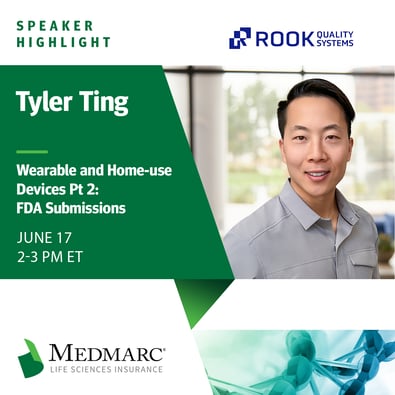
Presented by Tyler Ting, Director of Regulatory at Rook Quality Systems
During the on-demand webinar, recorded live on June 17, 2026, Tyler Ting from Rook Quality Systems (RQS) focused on navigating FDA submissions for wearables and home-use devices. Tyler explained the four main regulatory pathways available: general wellness pathway (for non-medical devices), 510K exempt pathway (for Class 1 and 2 devices), 510K pathway (most common for pre-market authorization), and de novo pathway (for novel devices without predicates). He detailed the required documentation for each pathway, emphasizing the importance of human factors engineering and software documentation, particularly for connected devices. Tyler highlighted common submission gaps that founders often encounter, such as inadequate predicate comparisons, mismatched performance testing, incomplete software documentation, insufficient human factors data, and poorly reviewed labeling. He also covered practical tips for working with FDA, including the use of pre-submission meetings, responding to additional information requests, and maintaining clear communication with a single point of contact. The presentation concluded with recommendations to start documentation early, understand the appropriate regulatory pathway, and leverage FDA's collaborative tools to avoid costly delays.
On-demand Chapters:
00:00 - Intro About the Speaker; Tyler Ting Rose Rook Quality Systems
02:18 - About Rook Quality Systems (RQS)
06:44 - Choosing Your FDA Pathway
22:23 - Documentation Requirements
25:45 - 5 Common Submission Gaps
27:38 - Human Factors & Usability
31:13 - Cybersecurity & Software
35:20 - Responding to the FDA
42:26 - Keeping Your Submission On Track
44:42 - 5 Things to Walk Away With
46:07 - FAQs and Closing
On-Demand Video
Webinar Resources
|
|